Start with the right question
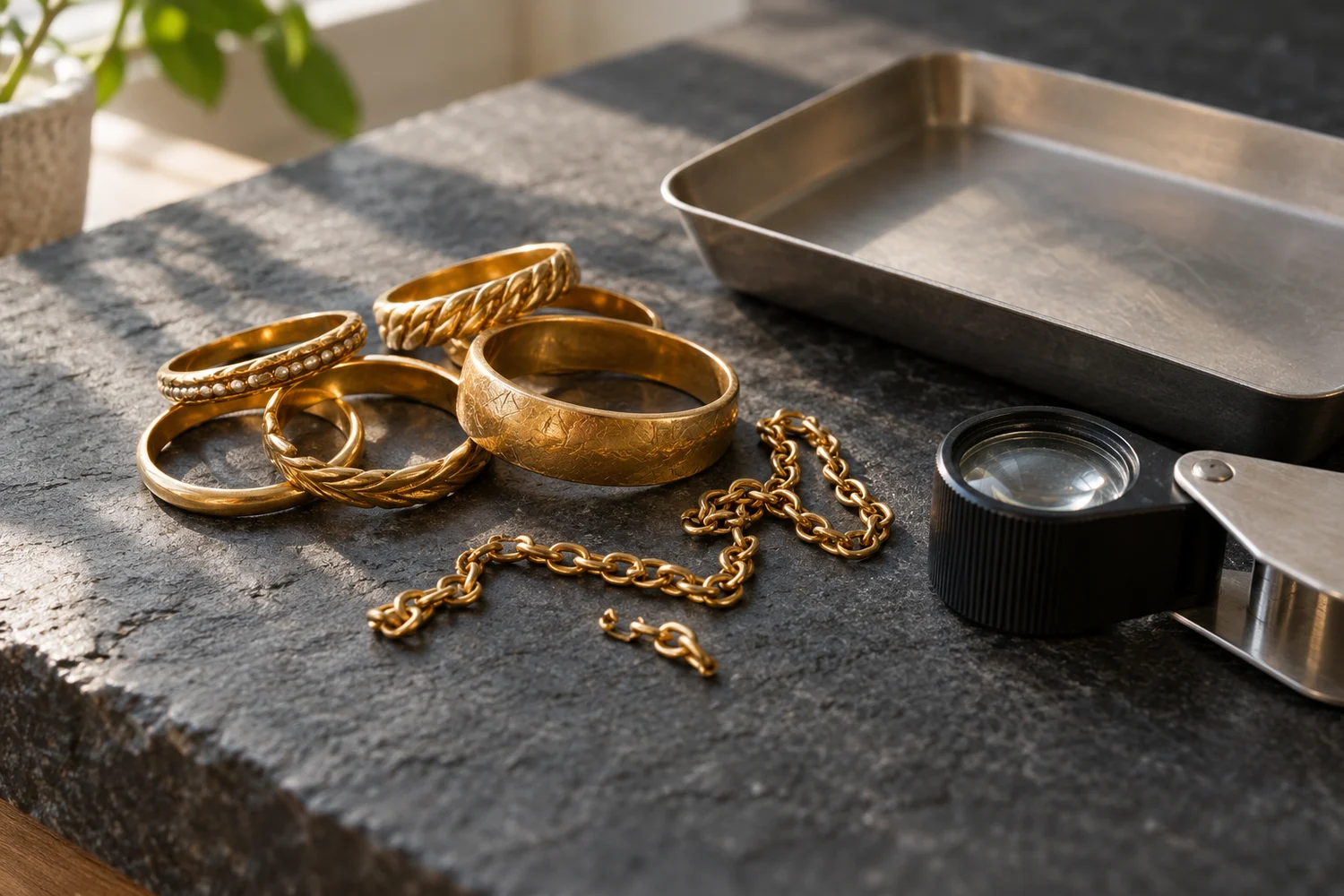
Searching for the gold price per gram in Munich usually means asking what a ring or chain might be worth today. A single quote cannot answer that. One gram of fine gold, one gram of 585 jewellery and one gram of an item including a stone describe different things. Before comparing figures, ask which basis each one uses. That makes an advertised number easier to interpret.
Prepare your items separately and note any visible marks. Decide which pieces you are considering selling and which you only want to understand better. An inherited piece can have personal value beyond its metal content. Knowing its theoretical material value does not mean you have to sell it. Tell the shop whether you want an initial discussion or a specific buying offer.
Fineness and carats describe gold content
Fineness expresses the gold share of an alloy in parts per thousand. A 585 alloy has a theoretical gold share of 58.5 percent; 750 means 75 percent. Carats use a different scale for purity: 18-carat gold corresponds to 750 fineness. The World Gold Council explains this distinction between the weight of gold and its purity. Colour alone does not establish content; white and rose gold are alloys too.
A hallmark is useful information for a conversation, but it does not replace an assessment of your particular item. Keep pieces with different markings apart initially. For an unknown alloy, broken jewellery or dental material, do not guess a fineness merely to make a calculator return a number. An unresolved input is more useful than a precise-looking result built on an assumption.
How a theoretical material value is calculated
The basic orientation is eligible metal weight in grams × fine-gold price in euros per gram × fineness. Consider a deliberately fictional example: assume a fine-gold price of €100 per gram and 10 grams of confirmed 585 gold. The calculation is 10 × 100 × 0.585 = €585 in theoretical gold-content value. Neither €100 nor €585 is a current quotation or an offer from the shop.
International quotations may use US dollars and troy ounces. A euro-per-gram calculation needs consistent weight and currency units. One troy ounce equals 31.1034768 grams. Timing matters too: an older market quote and a newer shop offer are not simultaneous comparisons. Use the displayed euro-per-gram figure for orientation and check its source, timestamp and any warning about older or unavailable data.
Why the calculator does not promise payment
The City Mobile & Gold Al Fahad precious-metal calculator displays indicative market values. It does not confirm authenticity, alloy or the eligible weight of your jewellery. An item can include components that are not valued as gold. Ask which weight is being used and how stones or other materials are treated.
A buyer may account for assessment, processing and its own business calculation. This guide does not assign a standard deduction or claim a margin for this shop. Ask for the actual explanation rather than assuming a percentage. A particular watch, branded piece or collectible can also raise a different valuation question from scrap metal. Clarify whether the offer concerns material alone or the object as a whole.
Compare offers on matching terms
Record the same details for each offer: item, assessed fineness, eligible grams, amount offered and time. Ask about any charges and how long the proposal remains valid. An advertised “up to” figure only becomes useful once you know whether its conditions apply to your piece. The relevant figure for your decision is the actual total proposed under the agreed terms.
If you obtain several offers, compare them reasonably close together in time. Ask about the calculation before drawing conclusions from a difference. A different weight, alloy or quote time changes the comparison. Resolve uncertainties before agreeing. You can ask for time to consider a proposal; this guide does not claim a particular acceptance period or free assessment service for the business.
Preparing for a visit in Munich
You can discuss gold jewellery or a watch in person at City Mobile & Gold Al Fahad, Landwehrstraße 4, 80336 Munich. Whether a purchase is possible and on what terms is discussed after assessment in store. Call ahead to ask what you should bring for your item. Keep any existing receipts or supporting documents available, and let the shop confirm its specific requirements.
Your checklist is simple: bring pieces separately, note existing marks, leave unknown fineness unresolved, distinguish the calculation from an offer, clarify charges and payment details, and then decide. An online number cannot replace that discussion. See contact and directions or open the calculator. If you are also considering a phone, our used-smartphone checklist covers the questions to bring to that conversation.
Common questions
Is the calculator value my buying price?
No. It is an indicative market value. An actual buying offer requires an assessment of the item in store.
Can I combine 585 and 750 gold?
Enter weights separately by confirmed fineness. Different alloys have different theoretical gold shares.
What if I do not know the alloy?
Have it assessed. Guessing the fineness will not provide a dependable calculation.
Sources & context
Manufacturer and specialist sources checked on 21 October 2026. This is general guidance; specific offers and procedures must be confirmed with the shop.