Why dental gold has no single value per gram
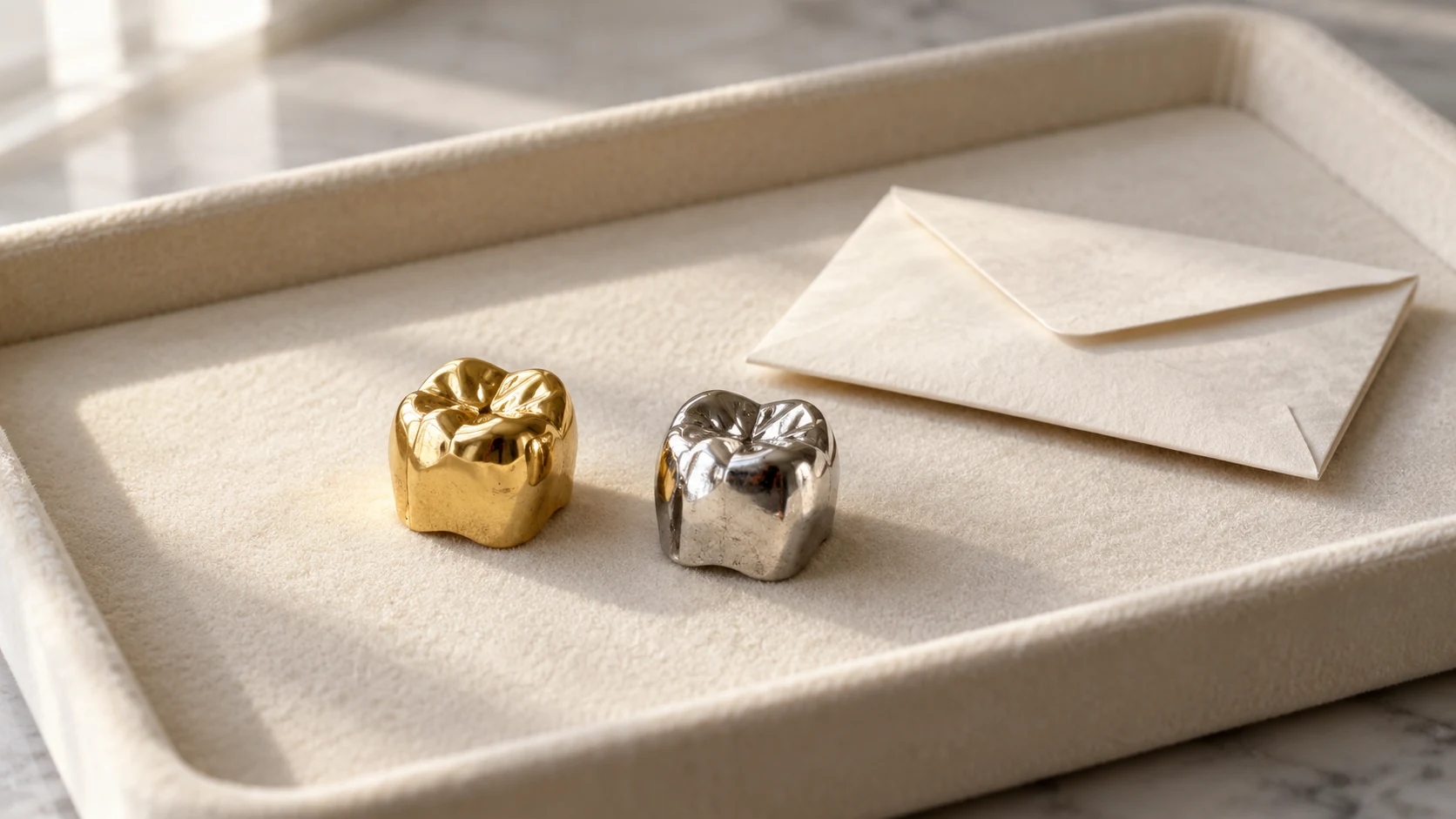
Dental gold describes a group of dental materials, rather than one defined fineness such as a confirmed 750 jewellery alloy. Refiner ESG explains that several precious metals may be involved and that composition is analysed for valuation. For your preparation, a yellow surface is therefore no reason to select a high gold percentage automatically.
Collect existing information without treating it as an assessment. Is there a material record or paperwork for the dental work? Do separate pieces really share the same alloy? Note what is known and what remains unresolved. A silver-coloured piece should not automatically be treated as silver or palladium either. This guide explains the questions to ask; it cannot identify your material remotely.
Total weight is not automatically metal weight
A crown or bridge can contain material besides metal. Degussa specifically discusses teeth and ceramic as non-metal components of dental material. A household scale initially weighs the whole object placed on it. That number is not automatically the appropriate input for a precious-metal calculation.
Before an assessment, ask how attached material and the weight used will be handled. Establish whether testing changes the object and what consent is required. Do not chip off ceramic, grind components or attempt chemical tests yourself. A description, existing paperwork and a question about the appropriate assessment method are enough for an initial enquiry. Keep individual pieces safely separated so they cannot be lost or confused.
Use the four-metal calculator without counting the same weight twice
The City Mobile & Gold precious-metal calculator displays indicative market values for gold, silver, platinum and palladium. It does not analyse dental alloys. Select a metal and confirmed fineness only when those details genuinely apply to the metal weight being entered. An unknown alloy should remain unresolved instead of being replaced with a plausible-sounding carat value.
Do not enter the same total object weight separately as pure gold, silver, platinum and palladium. That would add four different assumptions about one object. If an analysis identifies several metal shares, the calculation must match those shares and the basis of each input. Ask for an explanation of unclear figures. Even correct arithmetic using a live quotation depends on reliable material and weight inputs.
Questions to ask about a specific offer
Request a clear basis: which metals were identified, which weight and fineness are used, what quotation time applies, and what total is actually offered? Also establish possible assessment or processing charges and what happens to the material if you decline. Write down unresolved questions before consenting to alteration or handing anything over.
For an enquiry in Munich, contact City Mobile & Gold Al Fahad and first ask whether your particular dental material can be accepted or assessed. This article confirms no in-house laboratory analysis, blanket acceptance of dental alloys or particular payment by the business. For jewellery and general comparisons, the guide to gold prices per gram and buying offers explains the underlying distinction between a market calculation and an offer.
Common questions
Can I value dental gold by its colour?
No. Colour establishes neither the metal nor its percentage. Reliable material information or suitable assessment is needed.
Can I enter an entire crown’s weight as gold?
Only if that input basis has actually been confirmed. Non-metal components and unknown alloy make total weight alone unsuitable.
Is the calculator result an offer for my dental gold?
No. It is an indicative market calculation using your inputs. Whether the business accepts the material and on what terms must be established separately.
Sources & context
Manufacturer and specialist sources checked on 31 October 2026. Editorial demo guide, not a documented customer repair or a shop-confirmed procedure. Confirm specific offers and processes with the business.